When the Smoke Clears: Understanding California's Wildfire Crisis
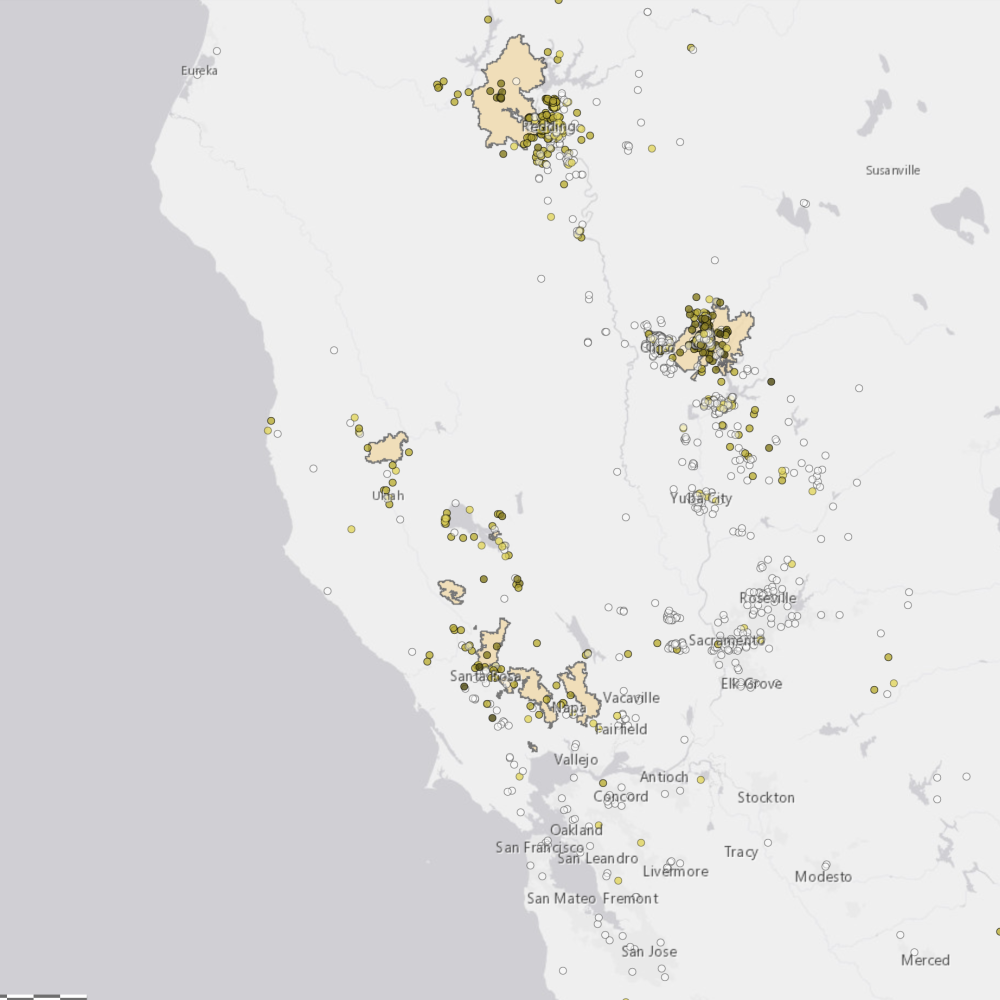
Over the last decade, California has faced an escalating wildfire crisis unlike anything in its recorded history. The 2017 Tubbs Fire marked a devastating turning point, tearing through Sonoma, Napa, and Lake counties — scorching more than 36,000 acres and claiming 22 lives. The following year brought an even greater tragedy: the Camp Fire burned for more than two weeks, killing 85 people, destroying over 18,000 structures, and consuming more than 150,000 acres. Then came 2020, which shattered all previous records when wildfires burned over 4 million acres across the state. And in 2025, the world watched as Los Angeles burned.
In response to this growing crisis, researchers at the UC Davis Environmental Health Sciences Center are working directly alongside communities throughout California. Their work spans the full scope of the challenge — from studying the health impacts on vulnerable populations and analyzing the chemical composition of wildfire smoke, to actively participating in wildland fire policy discussions that shape how the state prepares for and responds to future fires.
In response to this growing crisis, researchers at the UC Davis Environmental Health Sciences Center are working directly alongside communities throughout California. Their work spans the full scope of the challenge — from studying the health impacts on vulnerable populations and analyzing the chemical composition of wildfire smoke, to actively participating in wildland fire policy discussions that shape how the state prepares for and responds to future fires.